

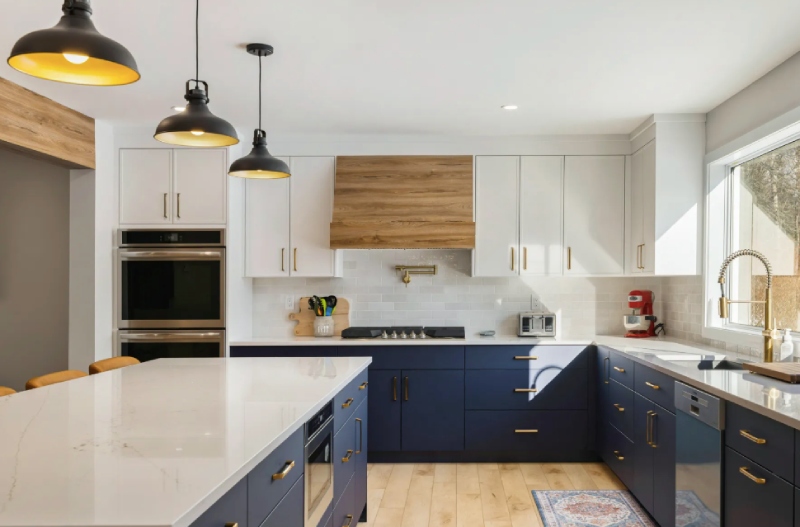
Aging in place in Moncton means planning your home so it continues to support your safety, comfort, and independence as your needs change. A Future-Ready home combines thoughtful layout, accessible features, and long-term renovation choices so you can prepare before mobility or caregiving needs become urgent.
Key Takeaways
- New Brunswick is already an older province: Statistics Canada reported that 23.3% of residents were age 65 or older on July 1, 2025.
- Future-ready home renovations are proactive. They plan for safer movement, easier daily routines, and changing needs before a crisis forces a rushed retrofit.
- Aging-in-place renovations in New Brunswick can be targeted or phased. A bathroom, entrance, lighting plan, or circulation route may be the right first step.
- CHBA Adaptiv Home training emphasizes safety, security, ease of use, comfort, accessibility, and occupant health, not just adding visible accessibility products.
- A home’s layout can support long-term independence when key rooms, routes, storage, lighting, and entrances are easier to use over time.
Why Are So Many Baby Boomers in Moncton Choosing to Renovate Instead of Moving to Retirement Homes?
No single Moncton statistic tracks how many baby boomers choose renovation over retirement living, but many homeowners want more control over where and how they live as they get older. In New Brunswick, 23.3% of the population was 65 or older as of July 1, 2025, according to Statistics Canada, so housing that supports later life is already a mainstream planning issue.
Renovating can preserve familiar neighbours, routines, community connections, and a house you already know. Moving can still be the right choice when care needs, finances, maintenance, or the home’s structure make renovation impractical. A good plan should compare both options honestly rather than assume one answer fits everyone.
If you already need broader home renovations in Moncton, incorporating future-ready thinking can help one project solve today’s problem while also reducing tomorrow’s barriers.
What Does ‘Aging in Place’ Actually Mean and Is It Realistic for My Family?
Aging in place means remaining in your own home safely, comfortably, and as independently as possible as your needs change over time. It encompasses both the personal goal of staying at home and the practical planning that helps the home continue to support that goal.
For many families, aging in place is realistic when the home can be adapted, the homeowner’s health and support needs can be met, and the budget is feasible. It does not mean promising that someone can remain in the same house forever. It means creating more options and removing avoidable barriers where practical.
A Future-Ready assessment can look beyond a single fixture and ask broader questions. Is the main entrance accessible in winter? Can you reach a bathroom without stairs? Are storage, switches, and lighting easy to use? Could a family member or caregiver provide assistance if needed?
At NYCO Renovations, Future-Ready aging-in-place renovations are designed with that broader view in mind. We start with how you use the home now, what you want to protect, and what could become difficult later. The goal is practical safety that still feels residential, personal, and like your home.
Why Is a ‘Future-Ready’ Home Becoming the New Forever Home for Canadians 55+?
A Future-Ready home is a practical alternative to the old idea of a forever home because it is designed to adapt as life changes. Instead of assuming the house will keep working simply because you plan to stay, Future-Ready home renovations ask what should change so the home remains comfortable and usable over time.
Better lighting can reduce visual strain. A low-threshold shower can make bathing easier after a temporary injury and later in life. Lever handles are easier to operate when grip strength is reduced. Pull-out storage can reduce bending and reaching. A main-floor room may be planned so it can serve a different purpose later.
The Canadian Home Builders’ Association describes AdaptivHome™ Renovation as an approach that supports people who want to remain in their homes as long as possible, regardless of age or condition. Its training covers safety, security, ease of use, comfort, accessibility, and occupant health. NYCO is AdaptivHome certified for aging-in-place work, and that philosophy is built into our Future-Ready program.
Planning ahead also gives you more design freedom. You can incorporate features during a normal renovation so they look intentional rather than added in a hurry. At NYCO, we support that work with clear communication and a 5-year workmanship warranty.
Why Are Most Canadian Homes Not Built for People Who Want to Age in Place?
Many Canadian homes were designed around the needs of an average able-bodied occupant at the time they were built, not around how mobility, balance, vision, reach, or caregiving needs may change over decades. That is why ordinary features can become barriers even when the house is well maintained.
- Steps at exterior entrances
- Narrow or awkward circulation routes
- High bathtub or shower thresholds
- Tight bathrooms with limited clear floor space
- Laundry located only in a basement
- Dim hallways, stairs, or exterior approaches
- Storage that requires frequent bending, stretching, or climbing
- Doorknobs and hardware that are harder to use with limited grip strength
The better question is which barriers affect the homeowner now, which may matter later, and which can be addressed efficiently when other work is already planned.
Bathrooms are a common starting point. A standard bathroom renovation can become more future-ready by considering a lower shower entry, slip-resistant flooring, reinforced wall areas for future supports, better lighting, and a layout that leaves more room to move. You can incorporate these choices into a bathroom renovation in Moncton without making the room feel clinical.
What Is the Difference Between an Accessibility Renovation and a Future-Ready Aging in Place Renovation?
An accessibility renovation often begins with a specific current barrier, while a Future-Ready aging-in-place renovation considers both current needs and likely future needs. The two approaches overlap, and both can include the same physical features, but the planning lens differs.
An accessibility renovation may be prompted by a wheelchair, a walker, an injury, a disability, or an immediate difficulty using part of the home. The goal is to solve a current access problem clearly and safely. A future-ready plan can do that too, but it also asks what should be built now so the homeowner has fewer obstacles later.
For example, a homeowner renovating a shower may not need a grab bar today. A Future-Ready plan might still include proper blocking behind the finished wall so a grab bar can be added later without reopening the wall. A kitchen renovation might use custom cabinetry to bring everyday storage within easier reach. When cabinetry is part of the project, Nyco custom cabinetry helps connect function and design.
A simple way to think about it is this: accessibility addresses a barrier, while future-ready planning anticipates change. The best solution starts with the person, the home, the daily routine, and the priorities that matter most.
How Does the Layout of My Moncton Home Affect My Long-Term Independence?
Your home’s layout affects long-term independence because daily movement becomes harder when essential rooms are separated by stairs, narrow passages, poor lighting, or difficult transitions. A layout that keeps important activities on an easy, well-lit route can give you more options if mobility changes.
Trace a typical day through the home. How do you enter? Can you reach a bathroom from the main living area without stairs? Is the laundry in the basement? Are there tight turns between the kitchen, hallway, and bathroom? These questions show how the whole house functions as a system.
- A safe, well-lit primary entrance with a stable landing and a manageable threshold.
- A bathroom that can be reached easily from the main living space.
- Clear circulation routes that reduce tight turns and unnecessary level changes.
- Storage and work areas that reduce repeated bending, stretching, or climbing.
- A plan for main-floor living if stairs become difficult later.
You do not have to solve every item at once. Aging-in-place renovations in New Brunswick can often be phased around the work you are already ready to do. NYCO’s process is built on a clear proposal, realistic expectations, and a single team managing the renovation from planning through closeout.
Frequently Asked Questions
How Do New Brunswick Winters Affect Seniors Trying to Age in Place at Home?
New Brunswick winters make exterior access and visibility especially important for aging in place. Snow, ice, wet footwear, shorter daylight hours, and freeze-thaw conditions can make steps, walkways, and entrances harder to navigate. A Future-Ready plan may review railings, exterior lighting, landing space, drainage, and thresholds, and assess whether a safer no-step or lower-step route is practical for the property.
What Is Universal Design and Why Does It Benefit Everyone, Not Just Seniors?
Universal design means creating spaces that a wide range of people can use easily, regardless of age or ability. Features such as better lighting, lever handles, clear pathways, easier storage, and low-threshold entries can also help children, visitors, people recovering from injury, and anyone carrying groceries or moving bulky items.
How Long Does a Full Aging in Place Renovation Take from Quote to Closeout?
The timeline for a full aging-in-place renovation depends on the scope, design work, material selections, permits, trade coordination, and whether structural changes are involved. A targeted bathroom or entry project will follow a different schedule than a multi-room renovation. Ask for a written plan that separates consultation, design, approvals, construction, and final walkthrough so you know what to expect.
Is It Cheaper to Retrofit My Current Moncton Home or Buy a One-Storey Home for Retirement?
There is no universally cheaper option. Retrofitting may make sense when you like your location, the home has a sound structure, and the priority changes are focused. Moving may make more sense when the home needs extensive structural work, maintenance is becoming burdensome, or a one-storey property better aligns with your long-term plans. Compare renovation scope, moving costs, housing prices, taxes, upkeep, and lifestyle before deciding.
Conclusion
A Future-Ready home is not about predicting every future need. It is about making thoughtful choices now so your home can keep working for you with fewer surprises later. For homeowners in Moncton, Dieppe, Riverview, and the surrounding Greater Moncton Area, NYCO Renovations offers AdaptivHome-informed planning, clear communication, full-service renovation management, and craftsmanship backed by a 5-year workmanship warranty. If you are ready to explore what aging in place in Moncton could look like for your home, book your free consultation and start with a conversation, not a sales pitch.


